



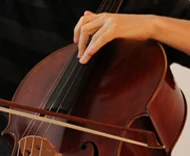
The #1 reason you can’t solve a technical problem is...
weak fundamentals
The fundamentals are at the core of every technical problem. It stands to reason since every motion of playing is based on them.
Continue ReadingThe #1 reason you can’t solve a technical problem is...
The fundamentals are at the core of every technical problem. It stands to reason since every motion of playing is based on them.
Continue ReadingMastery of the Dounis principles has huge benefits for your playing but there are many ways to misunderstand him. So to speed up your mastery here are...
The 5 most common mistakes and how to avoid them.
Learning to play a stringed instrument is like running an obstacle course. Only prodigies seem to avoid the pitfalls. So if you are not a prodigy, what can you do? What is the secret?
The answer is deceptively simple.
Master the Basics
Continue ReadingThe wonderful cellist of 30+ years with the Saint Paul Chamber Orchestra, Joshua Koestenbaum reveals a trick he learned from a bio feedback expert while at Yale University...
“The Sizzle”
Dounis referred to the impulse which starts the vibrato as the “sizzle.” He gave the example of touching a hot surface, like a frying pan. He also said “the sizzle” was the spark plug that ignited the vibrato. This is a single impulse similar to a guitarist who plucks his string in to emulate a legato. He must give the impulse enough force or pluck it hard enough to carry the sound to the next note. The vibrato is the same. The initial “shake” has to be enough to carry it through the note.
Therefore, if a player learns how to isolate this initial shake, then he or she can begin to understand how the vibrato and the left hand technique works altogether...
For years, the vibrato has long been thought of primarily as a means of adding expression to melodic passages. An “add on.” Teachers have emphasized this point which has resulted in a primary misconception.
Vibrato is more than a way to add expression to particular notes.
Vibrato is the basis of left hand technique...
The following interview was published in the book "With The Artists" in 1955. To my knowledge it is the only documented interview with Dounis ever made and probably occurred in the early 1950s in New York City.
These days the assumption warming up prevents injury seems to be a commonly accepted truth.
So why would Dounis, a master teacher, a medical doctor, a man with a reputation for successfully fixing physical problems recommend playing first thing in the morning without warming up?
What are "Displaced Impulses?"
These are impulses that end up in the wrong part of body when a player is struggling with a passage technically and work contrary to the natural movements of the body. A classic example is someone bobbing their head when playing a difficult passage. Of course it can be any part of the body, but always prevents the natural motion needed to play a passage.
The Cure...
Dounis always told his students to always imagine they were playing on a string 1/2 an inch above the real string.
To understand what he meant, do this exercise...
Dounis said that most string players "don't realize that the technique of Up Bow is very different than the Down Bow."
So... What's the difference?
Here's a breakdown...
It is debatable whether knowing about Bach's use of numbers and musical affections teaches us better how to play Bach cello suites, but it can't hurt. Bach is known to have used Numerology and the Doctrine of Affectations as a way to personalize his music and express his devotion to God.
Our Site
About
Testimonials
FAQ
Contact
Our Products
Book
Videos
Amazing Slow Downer
Our Services
Online Lessons
Masterclasses
Events
Further Information
Blog
Golden Age
Links & Affiliates
Music Store
George Neikrug CD
Bach CD

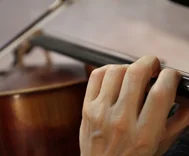
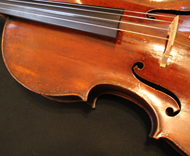

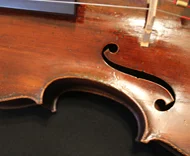
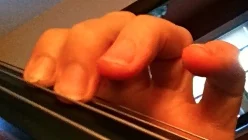
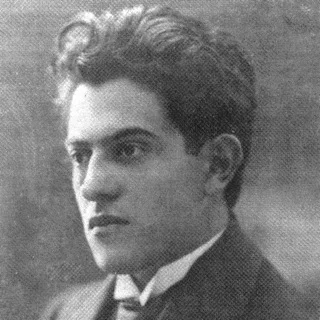

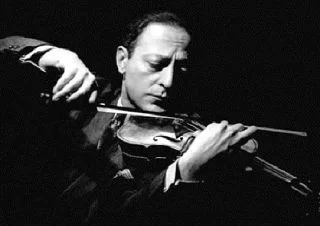
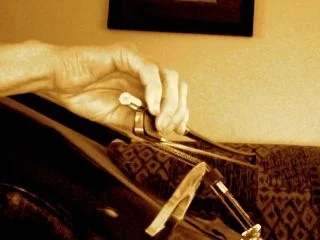
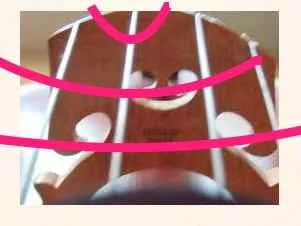
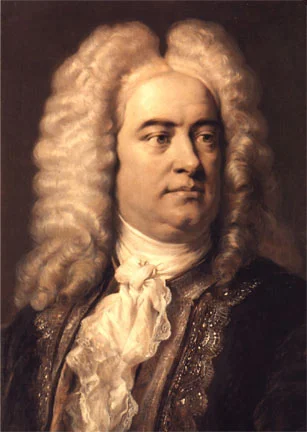
D.C. Dounis described several key points about performing the Bach cello suites or solo violin partitas. To understand his ideas let's us look at the following observations...